
Two teenagers opened fire at a mosque in San Diego, resulting in the deaths of three people. Authorities are investigating the incident, which has raised community concerns about safety.
European countries vary widely in battery capacity for renewable energy, with Turkey showing the largest planned expansion pipeline while Germany currently has the highest operational capacity.
According to Ember's European and Türkiye Electricity Review 2026 reports, Germany has the highest operational battery capacity in Europe at 2.8 gigawatts (GW), followed by Italy at 2 GW. A second group of countries have operational capacities between 0.5 GW and 1 GW: Ireland (0.92 GW), Sweden (0.75 GW), Bulgaria (0.56 GW), and France (0.52 GW). Romania (0.49 GW), Belgium (0.47 GW), Finland (0.39 GW), the Netherlands (0.39 GW), and Turkey (0.21 GW) all report capacities below 0.5 GW.
When project pipelines—including projects under construction, permitted, or announced—are considered, Turkey emerges as the most ambitious European country for battery expansion. Turkey’s project pipeline totals 32.8 GW, more than three times larger than its closest competitors: Germany (10.5 GW), Poland (10.4 GW), and Italy (10.2 GW).
Ufuk Alparslan, regional lead at Ember and author of the Türkiye Electricity Review 2026, told Euronews Business that Turkey’s growth is largely due to regulator policies opening unlimited grid capacity for storage-integrated wind and solar projects, spurring strong investor interest.
If these pipeline projects are realized, Turkey would lead Europe with a total battery capacity of 32.97 GW, followed by Germany (13.26 GW), Italy (12.15 GW), and Poland (10.42 GW). Other countries such as Romania, Spain, the Netherlands, and Belgium also anticipate significant increases, though levels would remain modest compared to the top four.
Dr. Beatrice Petrovich, senior energy analyst at Ember and author of the European Electricity Review 2026, said that record-low grid-scale battery costs in 2025—a 45% drop from 2024—are driving rapid deployment across Europe. She noted that improving battery economics make projects increasingly profitable without subsidies.
Petrovich emphasized that the scale of operational and planned battery systems depends significantly on policy decisions. She explained that stable policy frameworks provide predictable revenue streams that attract investment, while policy uncertainty can hinder progress.
Several EU countries including Bulgaria, Italy, and Spain demonstrate how supportive policies accelerate deployment. In contrast, Germany’s policy uncertainty, such as proposed preferential treatment for gas in backup power tenders and possible grid fee changes, may slow investment. France plans to more than double its capacity to 1.12 GW but would remain near the bottom among the countries analyzed, possibly due to its heavy reliance on nuclear energy, which comprised 69% of its electricity production in 2025 and accounted for 40% of the EU’s nuclear capacity.
Alparslan cautioned that approval and pre-licensing guarantee only grid capacity, not project completion. He said investors are eager to complete projects, but the Turkish government’s decisions on timeline extensions will influence how much capacity is realized. If projects fail after extensions, they could occupy grid capacity and block new wind and solar installations.
As of late 2025, Turkey’s installed wind and solar capacity reached 40 GW, making the 33 GW battery pipeline equal to 83% of existing capacity. The report notes that while average global batteries store power for 2.5 hours, most Turkish projects have shorter storage durations of around one hour.
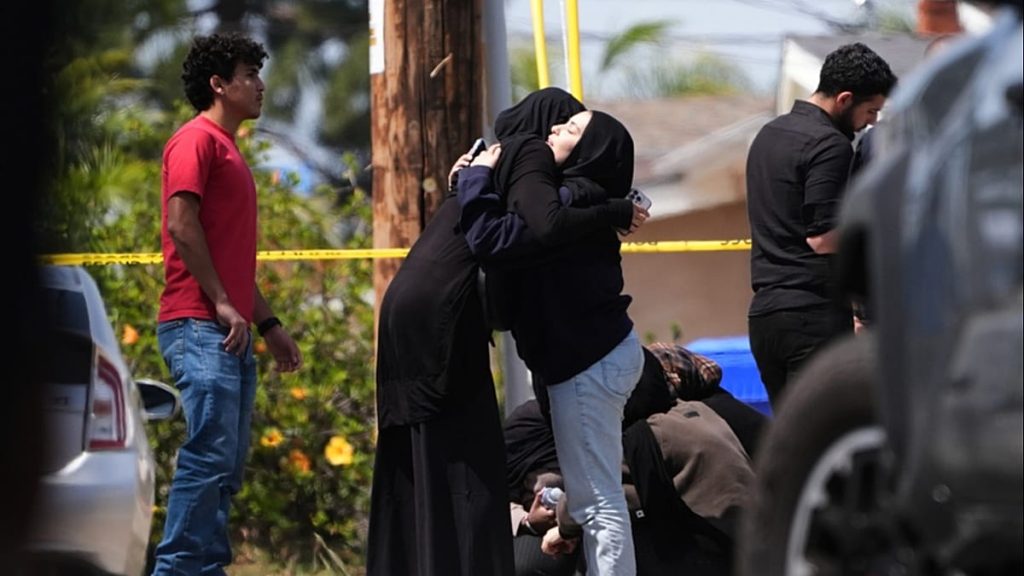 Three people killed as two teenagers open fire at a San Diego mosque
Two teenagers opened fire at a mosque in San Diego, resulting in the deaths of three people. Authorities are investigating the incident, which has raised community concerns about safety.
 Cities struggle to keep pace as war and climate define urban futures, WUF13 delegates warn
Delegates at WUF13 emphasize the challenges cities face due to war and climate change. They call for urgent action to address these critical urban issues.
 North Korea tells military to bolster defences against 'arch enemy'
North Korea has instructed its military to strengthen defensive measures in response to perceived threats from the United States. This directive highlights ongoing tensions between the two nations.
 Iran has responded to latest US peace proposal, Tehran official says
Iran has provided a response to the latest peace proposal put forth by the United States. Officials have outlined their stance and the implications for future negotiations.
