
Two teenagers opened fire at a mosque in San Diego, resulting in the deaths of three people. Authorities are investigating the incident, which has raised community concerns about safety.
The Iraqi Ministry of Oil reported a major oil find in the Qurnain block near the Saudi border, with initial reserves estimated at over 8.8 billion barrels.
Iraq holds the fifth largest proven oil reserves worldwide, estimated at 145 billion barrels, representing about 17% of Middle Eastern reserves and around 9% of global reserves, according to the US Energy Information Administration (EIA).
The Ministry of Oil announced the discovery of a large oil field in the southern province of Najaf, close to the border with Saudi Arabia. The discovery is considered one of the most significant in Iraq’s energy sector in recent years, with one exploration patch estimated to contain reserves exceeding 8.8 billion barrels of crude oil.
The Qurnain block, located in southwestern Iraq’s Najaf province about 180 kilometres from Baghdad along the Iraqi-Saudi border, covers an area of 8,773 square kilometres. It is considered among the most promising areas for oil exploration. The contract to develop, explore, and produce oil from this block was signed on 17 October 2024.
Drilling operations at the Shams-11 exploration well revealed the presence of light crude oil, with an initial production capacity of 3,248 barrels per day, according to the Ministry.
The announcement occurred during an official meeting between Iraqi Oil Minister Hayan Abdul Ghani and representatives of China’s ZhenHua Oil. They reviewed progress at the Qurnain site and discussed advanced drilling techniques to increase exploration and production efficiency and accelerate development.
ZhenHua Oil, through its subsidiary Qurnain Petroleum Limited, is the main operator of exploratory drilling and seismic survey operations in partnership with Iraqi entities. The company has submitted a rapid investment plan to accelerate the field’s development and move it to commercial production as soon as possible, the Ministry said.
Separately, Baghdad is working to accelerate a strategic pipeline project linking Basra province in the south with Haditha city in Anbar province near the Syrian border. This pipeline is planned to have an export capacity of 2.5 million barrels per day.
Iraq faces pressures on its oil exports due to the war in the Middle East and disruptions in the Strait of Hormuz, a critical corridor for Iraqi energy shipments to global markets.
Before recent regional tensions escalated, Iraq produced about 4.5 million barrels of oil per day, ranking as the third largest producer in the Organisation of Petroleum Exporting Countries (OPEC). It exported around 3.5 million barrels per day, approximately 90% of which transited the Strait of Hormuz.
According to official Ministry of Oil data, Iraq’s oil exports fell to 18.6 million barrels in March, generating revenues of $1.96 billion (€1.77 billion). This was a decline of about 71% in revenue compared to February, when Iraq exported more than 99 million barrels and earned $6.81 billion (€6.15 billion).
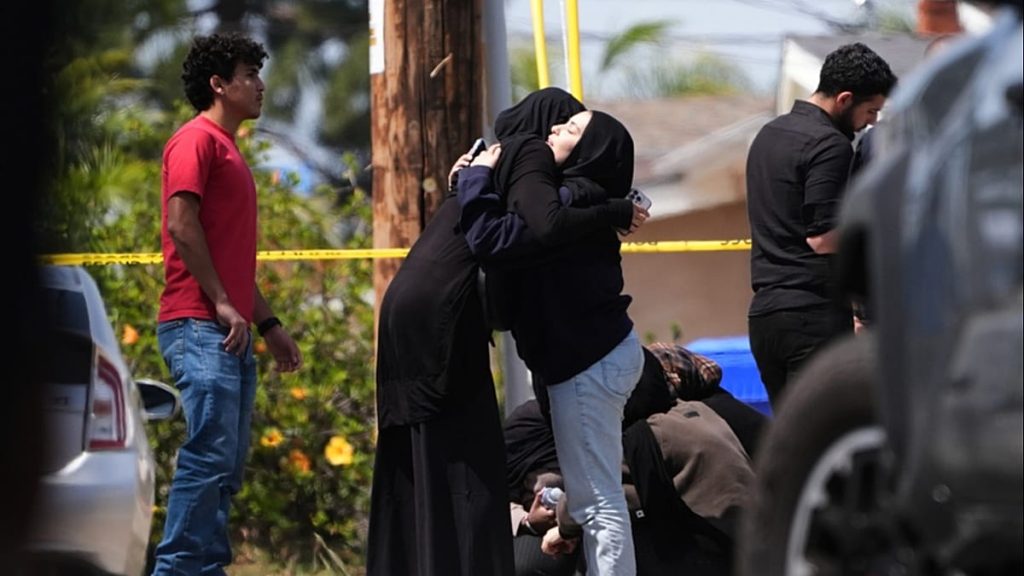 Three people killed as two teenagers open fire at a San Diego mosque
Two teenagers opened fire at a mosque in San Diego, resulting in the deaths of three people. Authorities are investigating the incident, which has raised community concerns about safety.
 Cities struggle to keep pace as war and climate define urban futures, WUF13 delegates warn
Delegates at WUF13 emphasize the challenges cities face due to war and climate change. They call for urgent action to address these critical urban issues.
 North Korea tells military to bolster defences against 'arch enemy'
North Korea has instructed its military to strengthen defensive measures in response to perceived threats from the United States. This directive highlights ongoing tensions between the two nations.
 Iran has responded to latest US peace proposal, Tehran official says
Iran has provided a response to the latest peace proposal put forth by the United States. Officials have outlined their stance and the implications for future negotiations.
